

Modern Conversations display, Tate St Ives 2021 © Kirstin Prisk
What does it mean to be modern?
What does it mean to be modern? Modern Conversations explores this question through 100 years of British and international art.
The artworks displayed in these six rooms span the 20th century through to the present day. Throughout this extraordinary ‘modern’ era, industrial growth and technological advancements has transformed daily life. While this rapid globalisation has brought benefits for some, it has also been founded on widespread losses of cultural traditions and rights. The artists raise questions about modern experience, such as: How do we relate to the natural and built environment? What is the experience of inhabiting a human body? What happens when science and technology overturn established beliefs?
Tate St Ives
Level 2, Level 3
Ongoing
Gallery admission required
Entry to both the display and the gallery is free for Tate Members, Locals' Pass holders and under 18s.
Become a member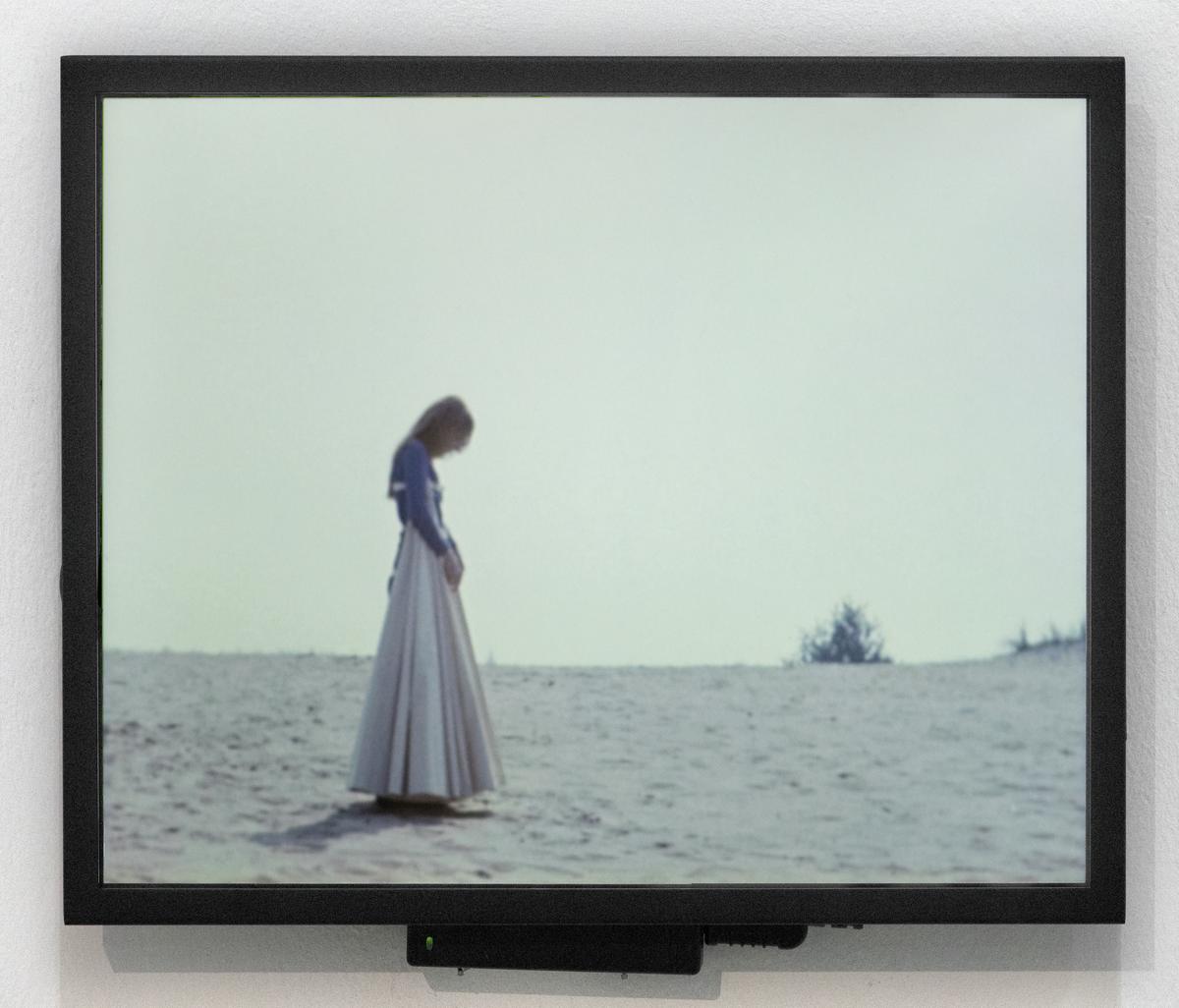
Rebecca Horn, Performances II 1973
Horn designed these ‘body extensions’ for herself and her friends. They limit or expand how a person can move and interact with their environment. These performances were made specifically for the camera. They show how the sculptures change the wearers’ relationship to the surrounding space and to other people. Horn has commented: ‘Looking back at these first pieces you always see a kind of cocoon, which I used to protect myself. Like the fans where I can lock myself in, enclose myself, then open and integrate another person into an intimate ritual. This intimacy of feeling and communication was a central part in the performances.’
Gallery label, May 2019
1/30
artworks in Modern Conversations
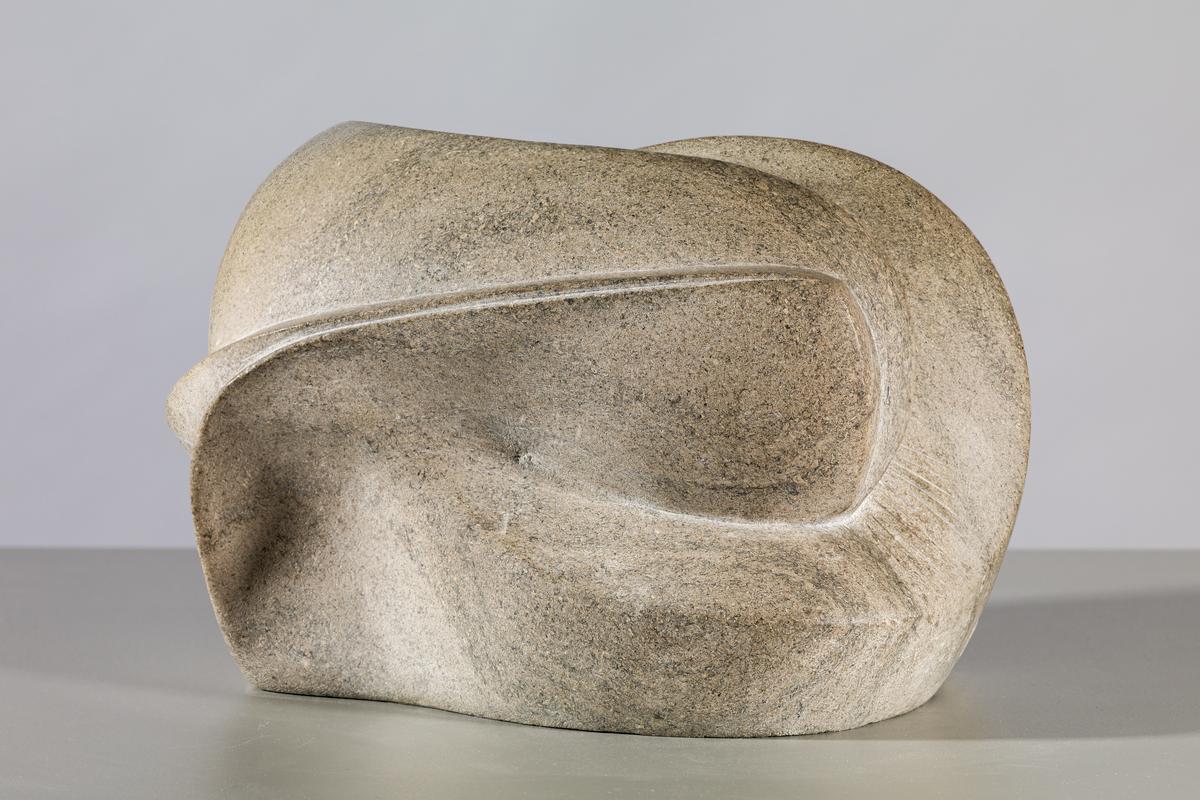
Naum Gabo, Kinetic Stone Carving 1936–44
When Gabo first set down his ideas on constructive sculpture in his ‘Realistic Manifesto’ in 1920, he dismissed the traditional carving of solid mass. Instead, he asserted sculpture’s description of space through construction. However, in the mid–1930s, he modified this view with a number of carved works in which he sought to convey space through a massive object. In works such as this he used the curling edges to articulate the space around the solid stone from which the work was made.
Gallery label, May 2007
2/30
artworks in Modern Conversations
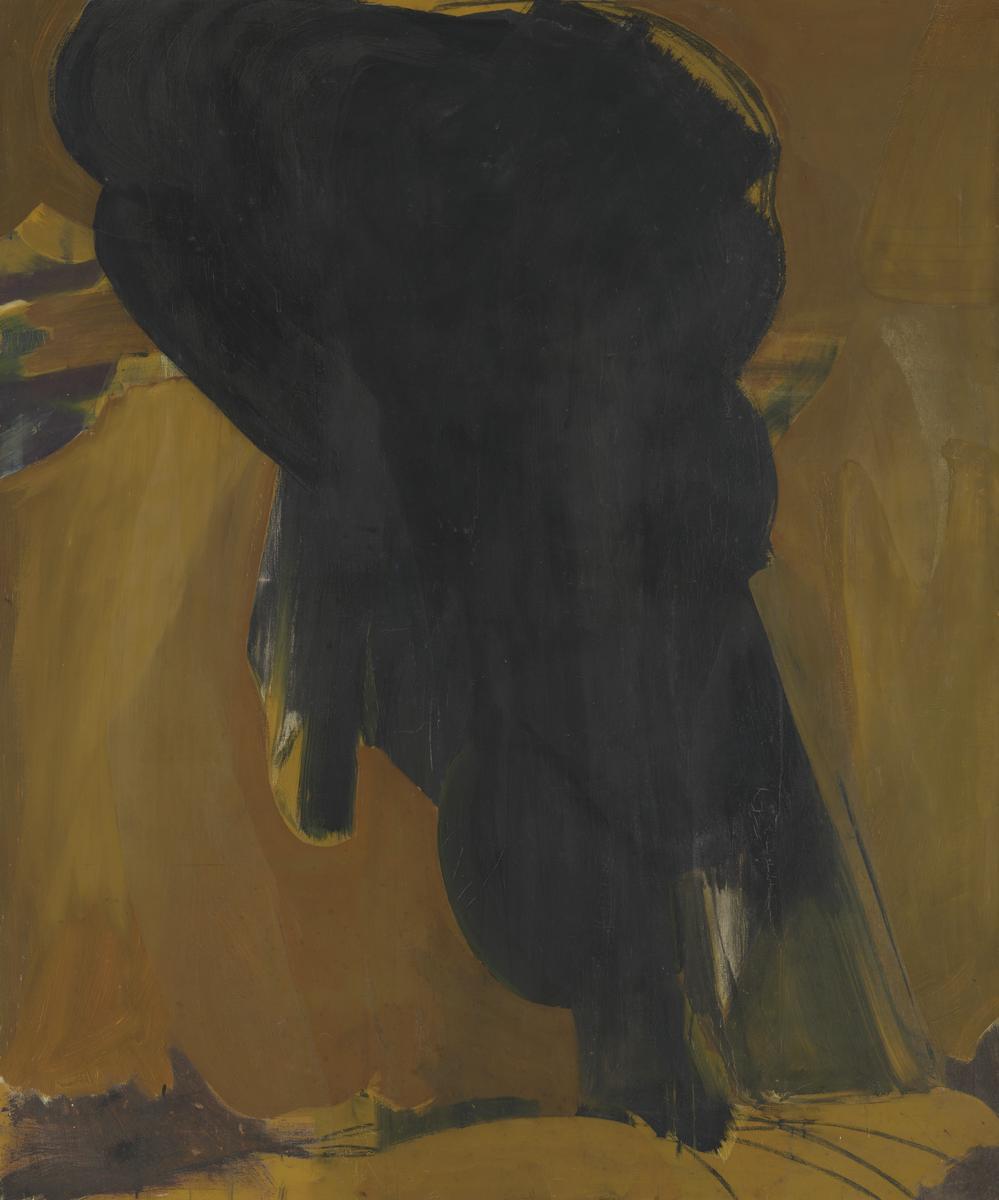
Karl Weschke, Pillar of Smoke 1964
Weschke arrived in Britain as a German prisoner of war and went on to spend forty years living in Cornwall. This painting, based on the burning of the gorse on the moorland above the town of Zennor, shows smoke rising in a threatening, anthropomorphic mass. Painted at the height of the Vietnam War, it evokes the barbarism suffered by successive generations. Weschke drew on his own memories of the Second World War, when the landscape would smoke for days after battle, while his image also suggests the bombing of Dresden and the burning of bodies in the death camps.
Gallery label, March 2024
3/30
artworks in Modern Conversations
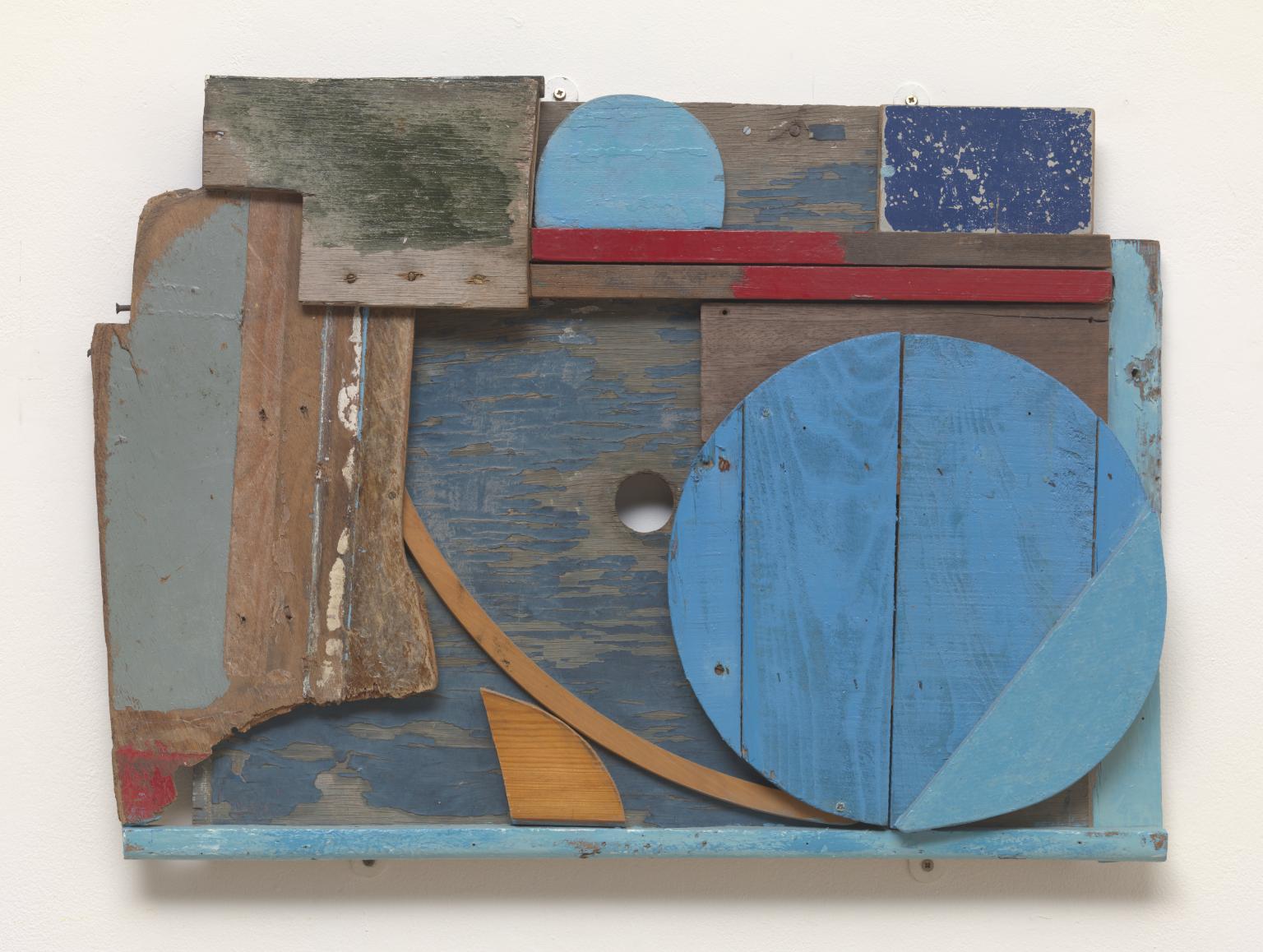
Margaret Mellis, Number Thirty Five 1983
Mellis trained as an artist in Edinburgh and Paris. Between 1939 and 1946 she became part of the community of avant-garde artists living and working in and around St Ives. This included Ben Nicholson and Barbara Hepworth, who lived briefly with Mellis and her husband Adrian Stokes in 1939. Impressed by the work of Nicholson and Naum Gabo she became a constructivist. This work comprises pieces of driftwood, including mahogany, pine and plywood, which she collected from the beach at Southwold, where she moved in 1976. Some of the pieces of wood were already painted when found, others were painted by the artist. She refers to her walk on the beach as a hunt and the driftwood collected as her trophies.
Gallery label, August 2004
4/30
artworks in Modern Conversations
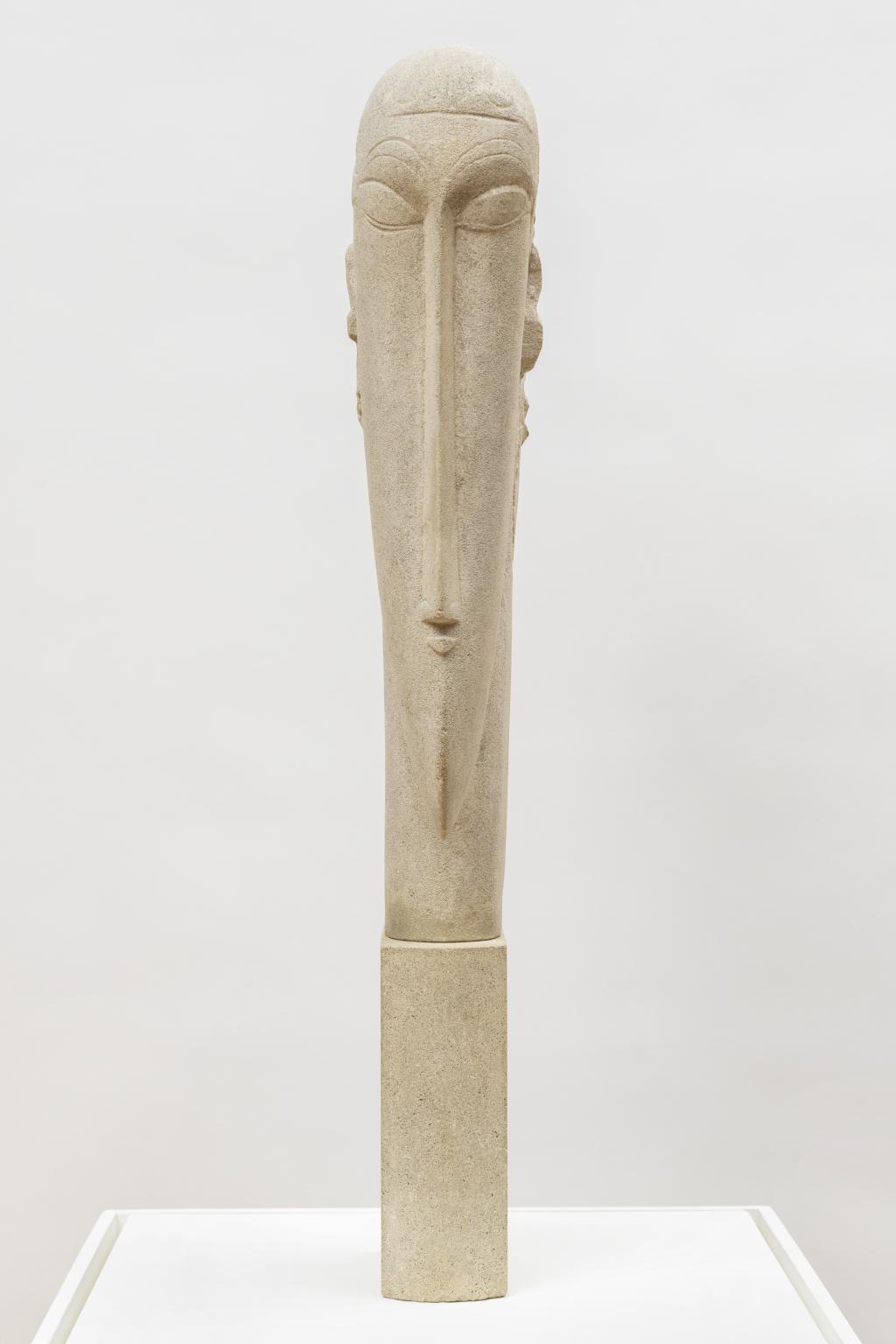
Amedeo Modigliani, Head c.1911–12
This is one of a series of radically simplified heads with elongated faces and stylised features that Modigliani made between 1911 and 1913. He was inspired by art from countries such as Cambodia, Egypt and Ivory Coast, which he saw in Paris’s ethnography museum. His patron Paul Alexandre recalled how Modigliani worked in this period: ‘When a figure haunted his mind, he would draw feverishly with unbelievable speed… He sculpted the same way. He drew for a long time, then he attacked the block directly.’
Gallery label, January 2019
5/30
artworks in Modern Conversations
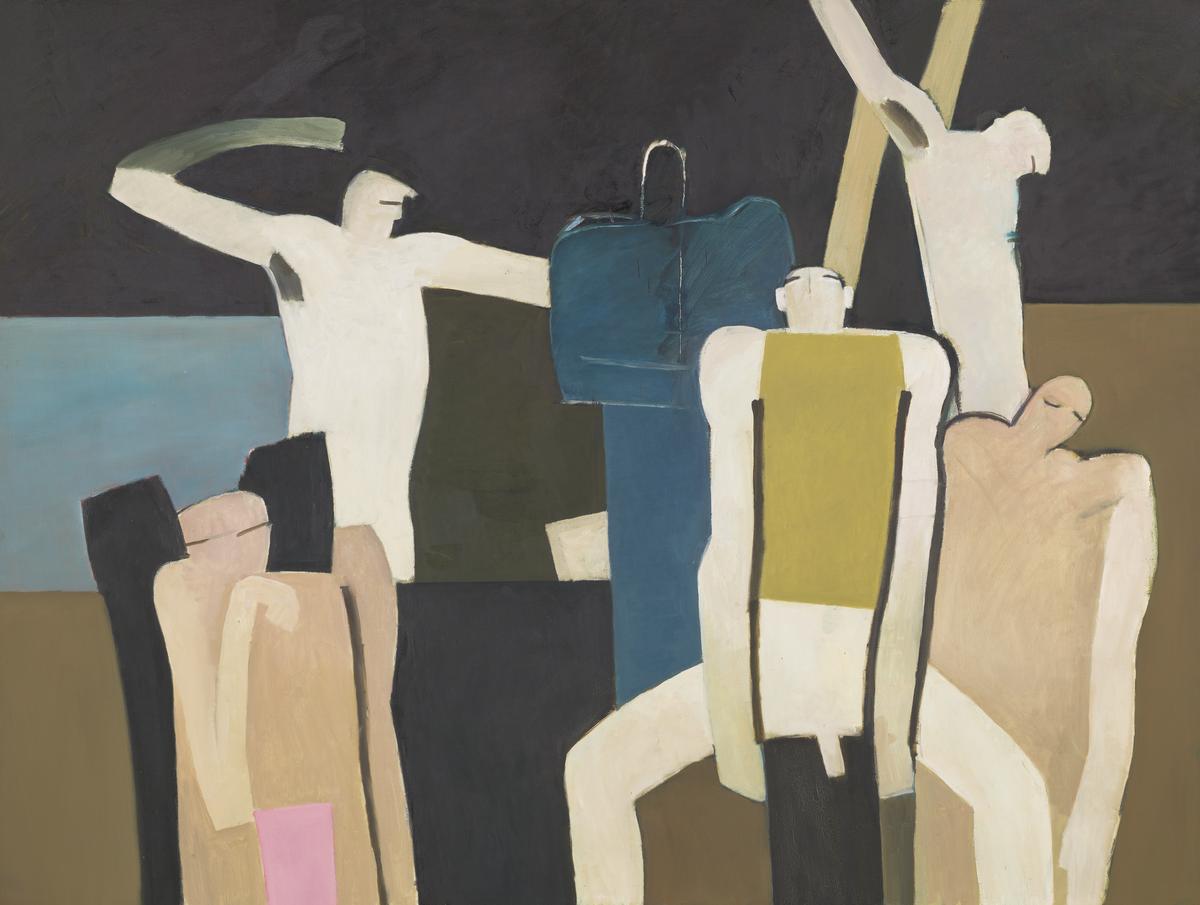
Keith Vaughan, Ninth Assembly of Figures (Eldorado Banal) 1976
6/30
artworks in Modern Conversations
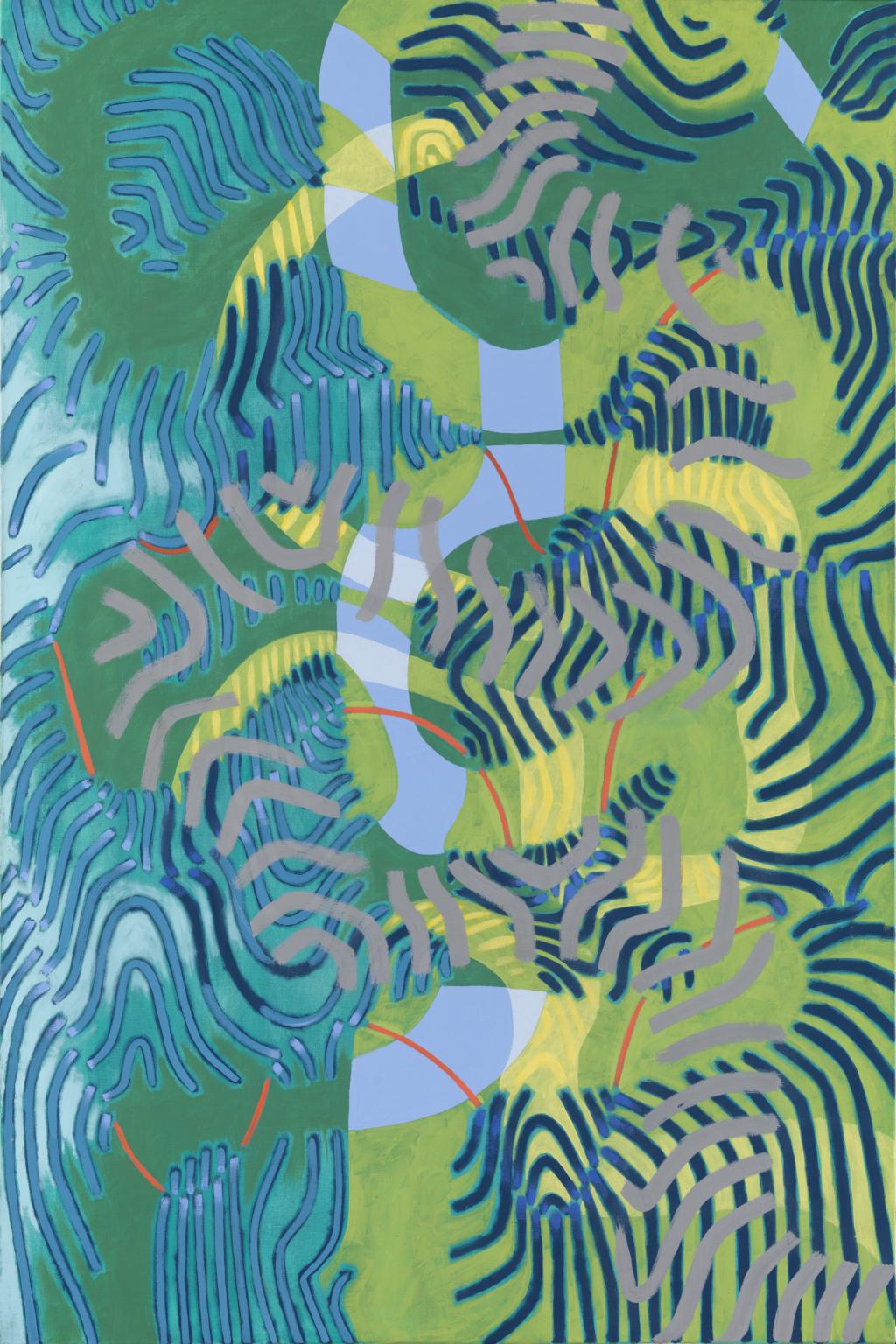
Bryan Wynter, Green Confluence 1974
7/30
artworks in Modern Conversations
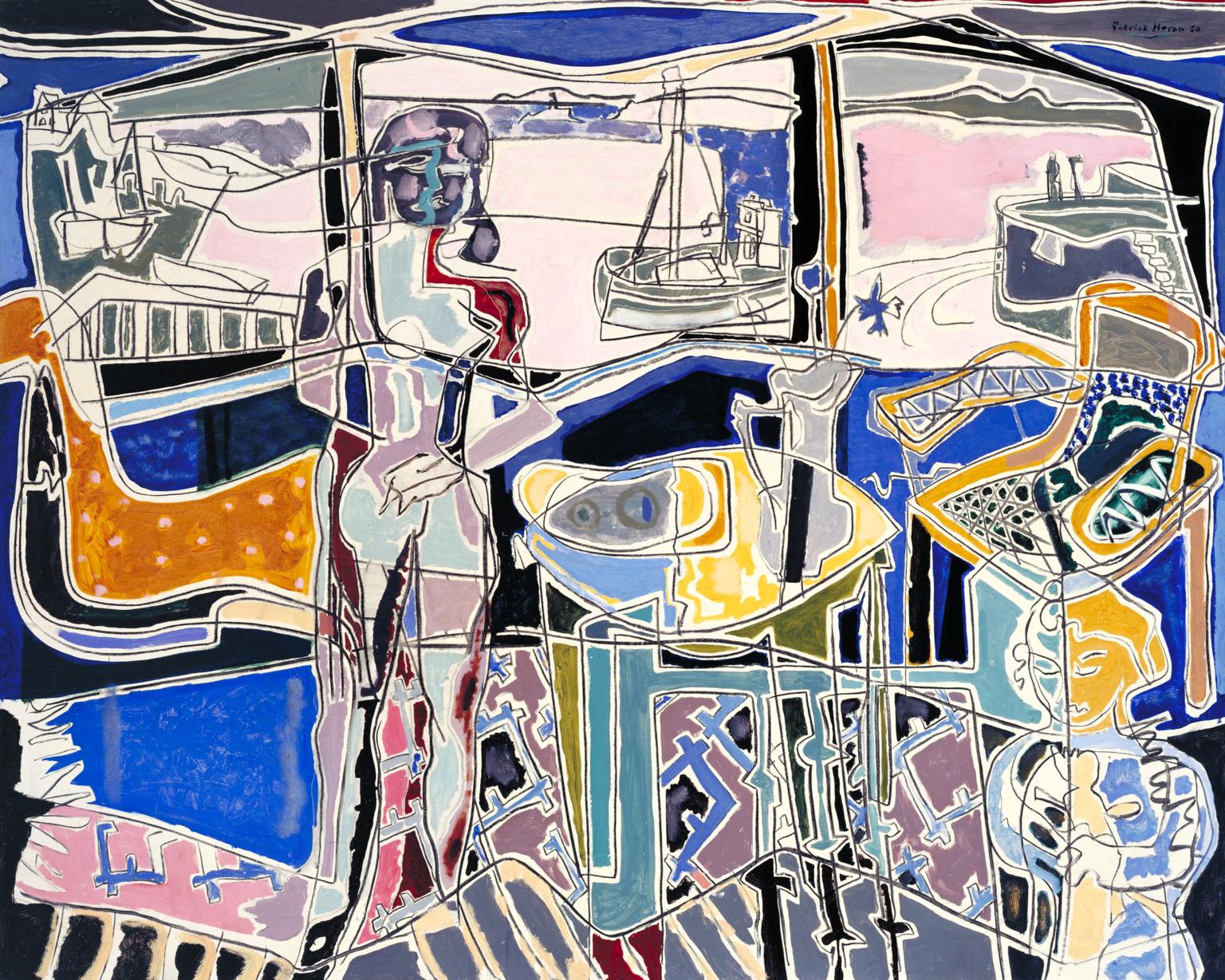
Patrick Heron, Harbour Window with Two Figures : St Ives : July 1950 1950
9/30
artworks in Modern Conversations
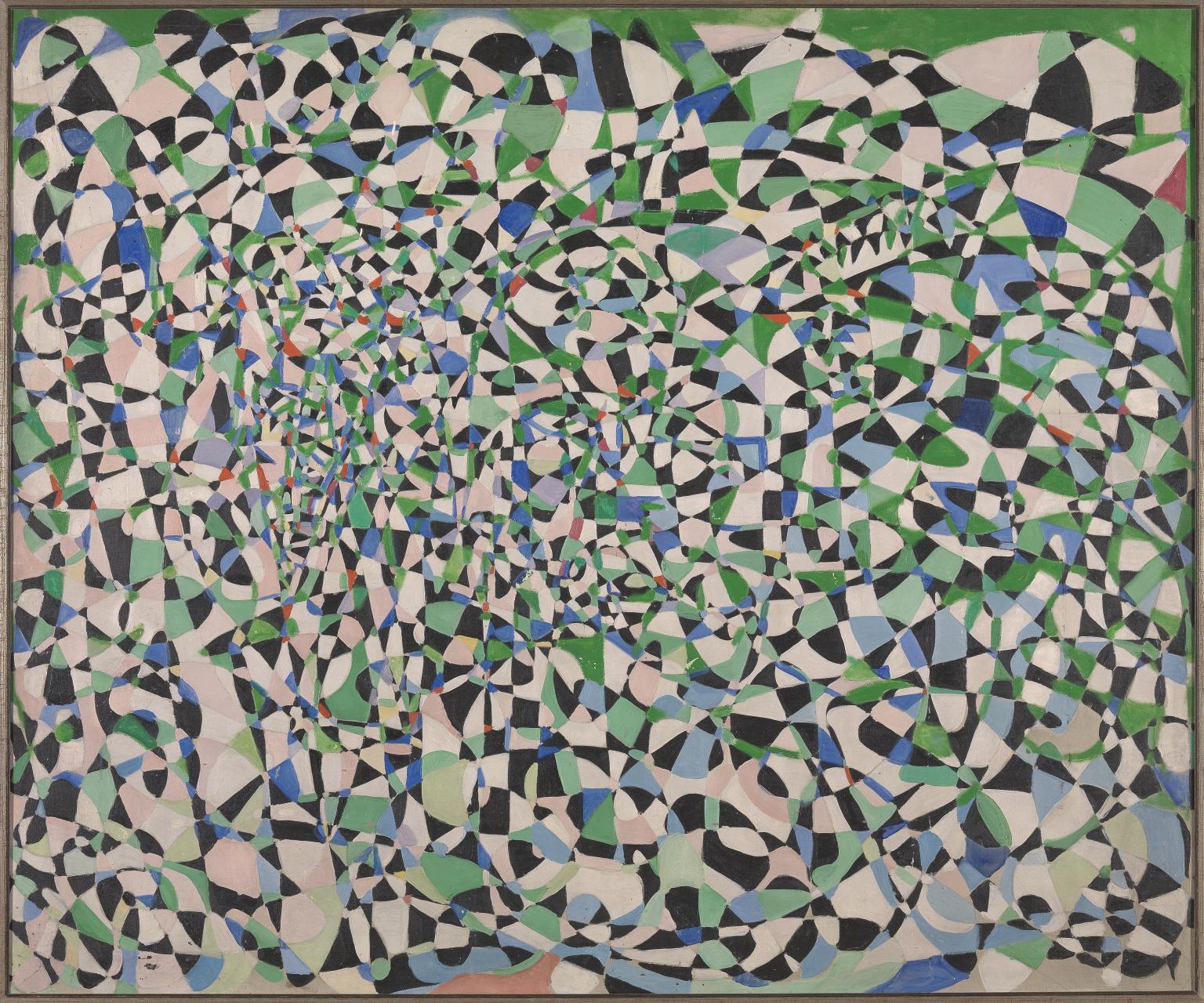
Fahrelnissa Zeid, Untitled c.1950s
Fahrelnissa Zeid used swirling, crossing lines to paint this abstract artwork. After drawing the lines in pencil, she filled in the shapes made between them with black, green, blue and pink. The result is a complex, kaleidoscopic effect. Zeid made the painting when she was living in London in the 1950s. In 1949 she had taken her first transatlantic flight and was captivated by the abstracted perspective of aerial views. She later translated their scale and feeling into the whirling shapes that appear in this painting. A divisionist effect is achieved, whereby individual patches of colour are built up to create an overall composition.
Gallery label, November 2021
10/30
artworks in Modern Conversations
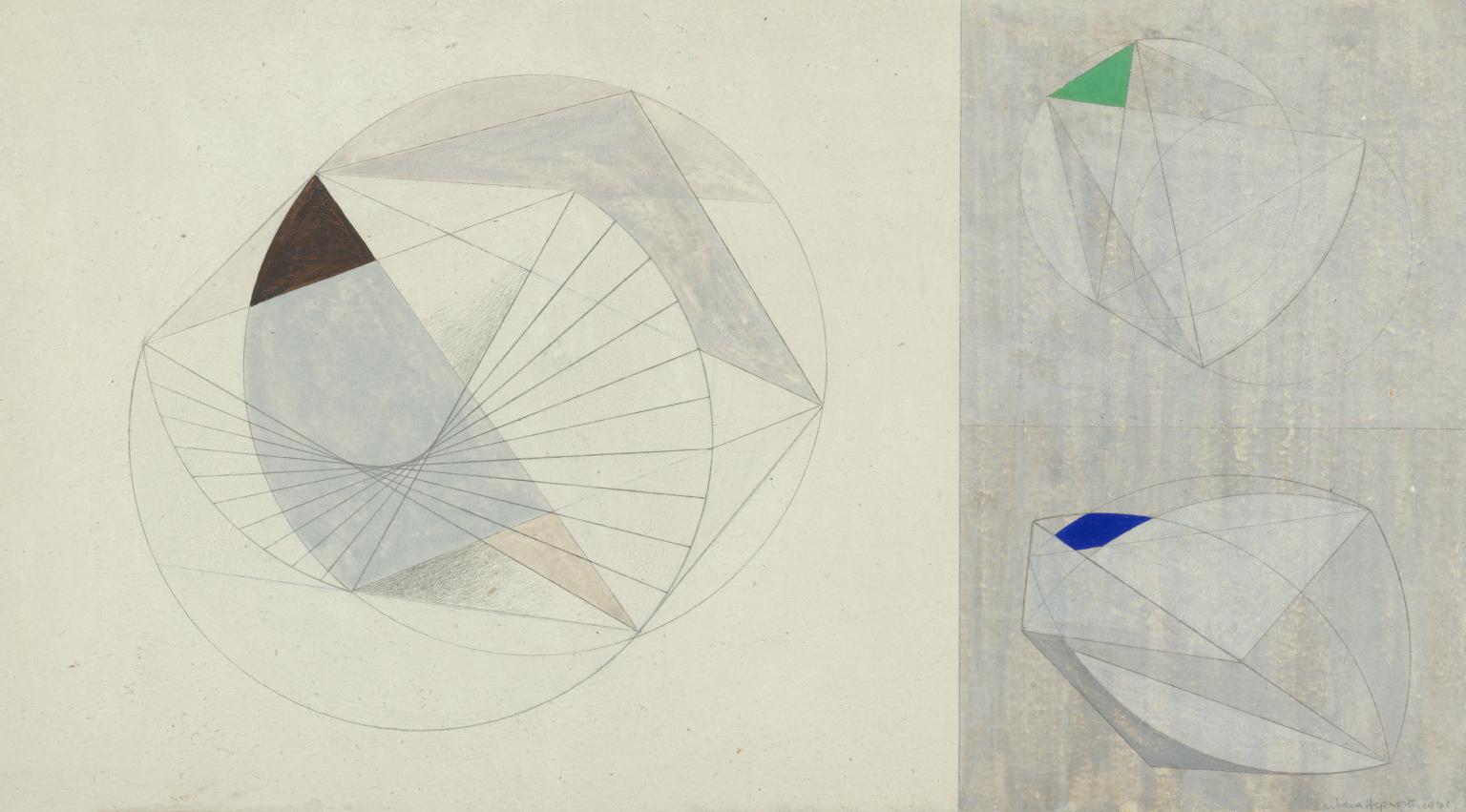
Dame Barbara Hepworth, Drawing for ‘Sculpture with Colour’ (Forms with Colour) 1941
11/30
artworks in Modern Conversations
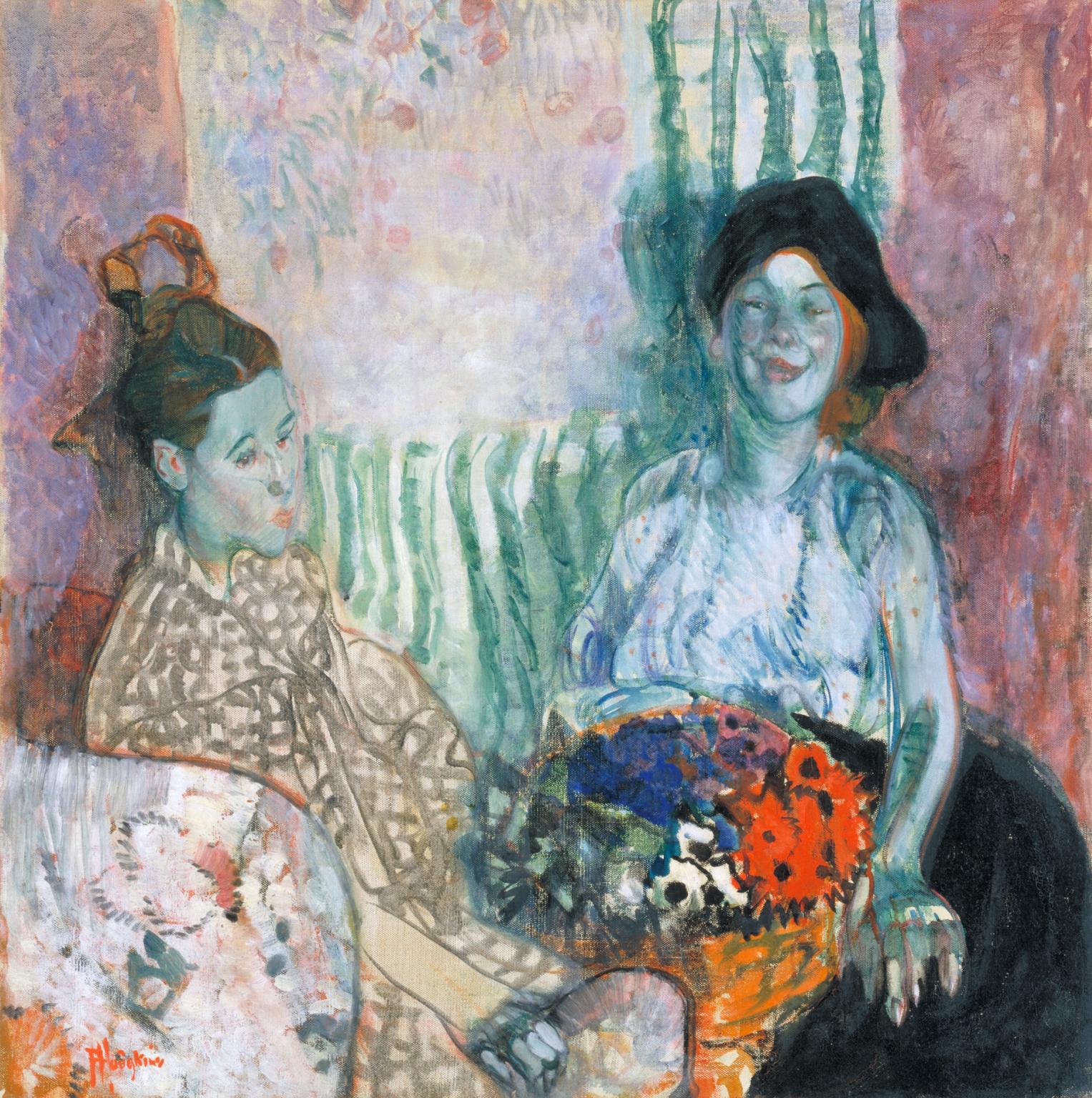
Frances Hodgkins, Loveday and Ann: Two Women with a Basket of Flowers 1915
Frances Hodgkins came to Britain in 1901 from the confined artistic scene of New Zealand. Spending long periods in Cornwall, home to the Newlyn and St Ives Schools, and in Paris, where she taught at the Académie Colarossi, Hodgkins ploughed her own furrow. In typically individualistic style, this portrait combines the mobility of watercolour with the intensity of oil, showcasing the artist's idiosyncratic drawing and quirky sense of colour.
Gallery label, February 2010
12/30
artworks in Modern Conversations
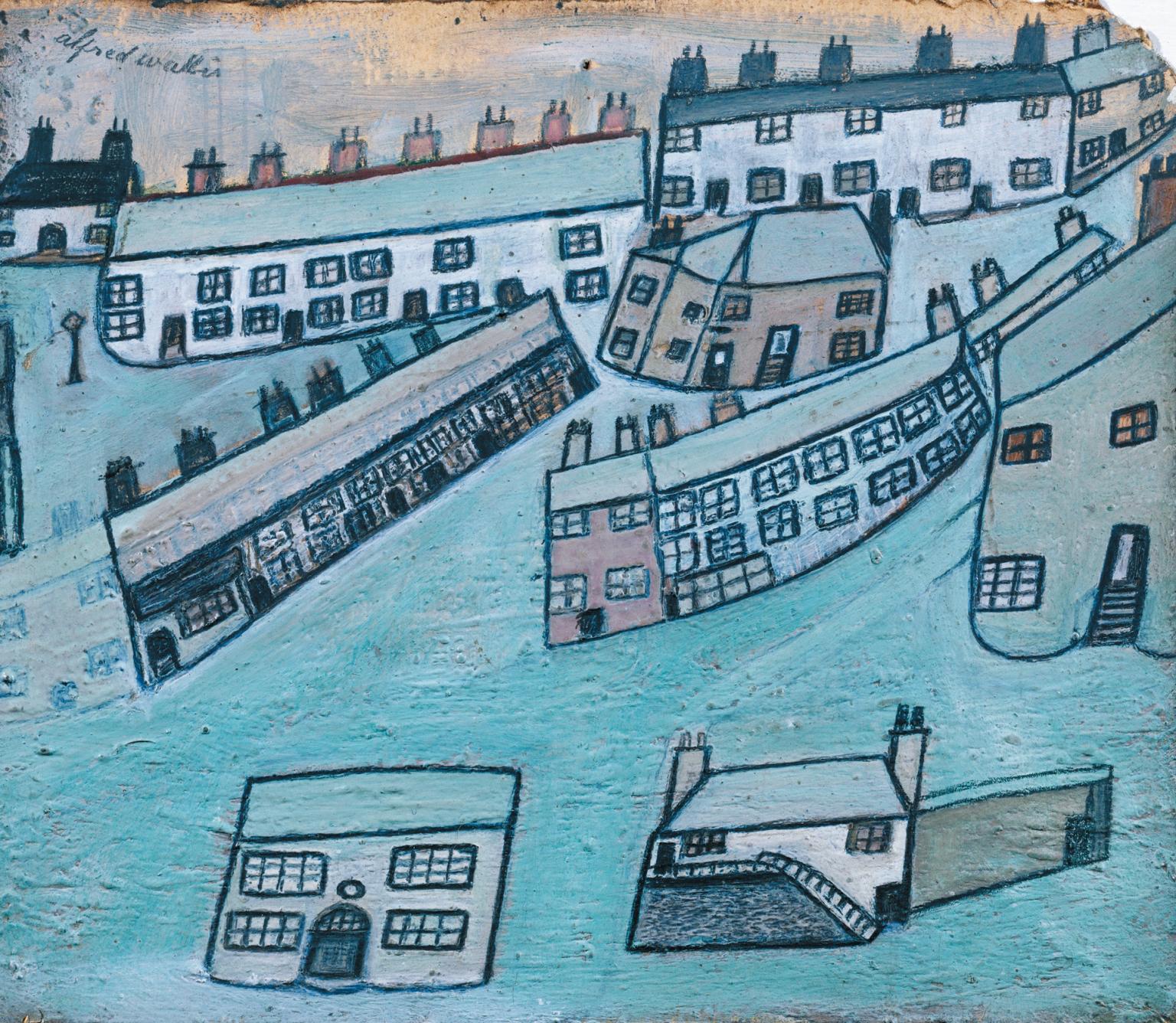
Alfred Wallis, Houses at St Ives, Cornwall ?c.1928–1933
Wallis had worked as seaman, ice cream vendor and scrap merchant before he took up painting as a hobby in his retirement. He lived in St Ives, Cornwall, a fishing community and artists’ colony. There he encountered the painters Ben Nicholson and Christopher Wood and his work was shown with theirs in London. Most of his paintings are of his local environment or of places and events remembered from his past.
Gallery label, July 2017
13/30
artworks in Modern Conversations
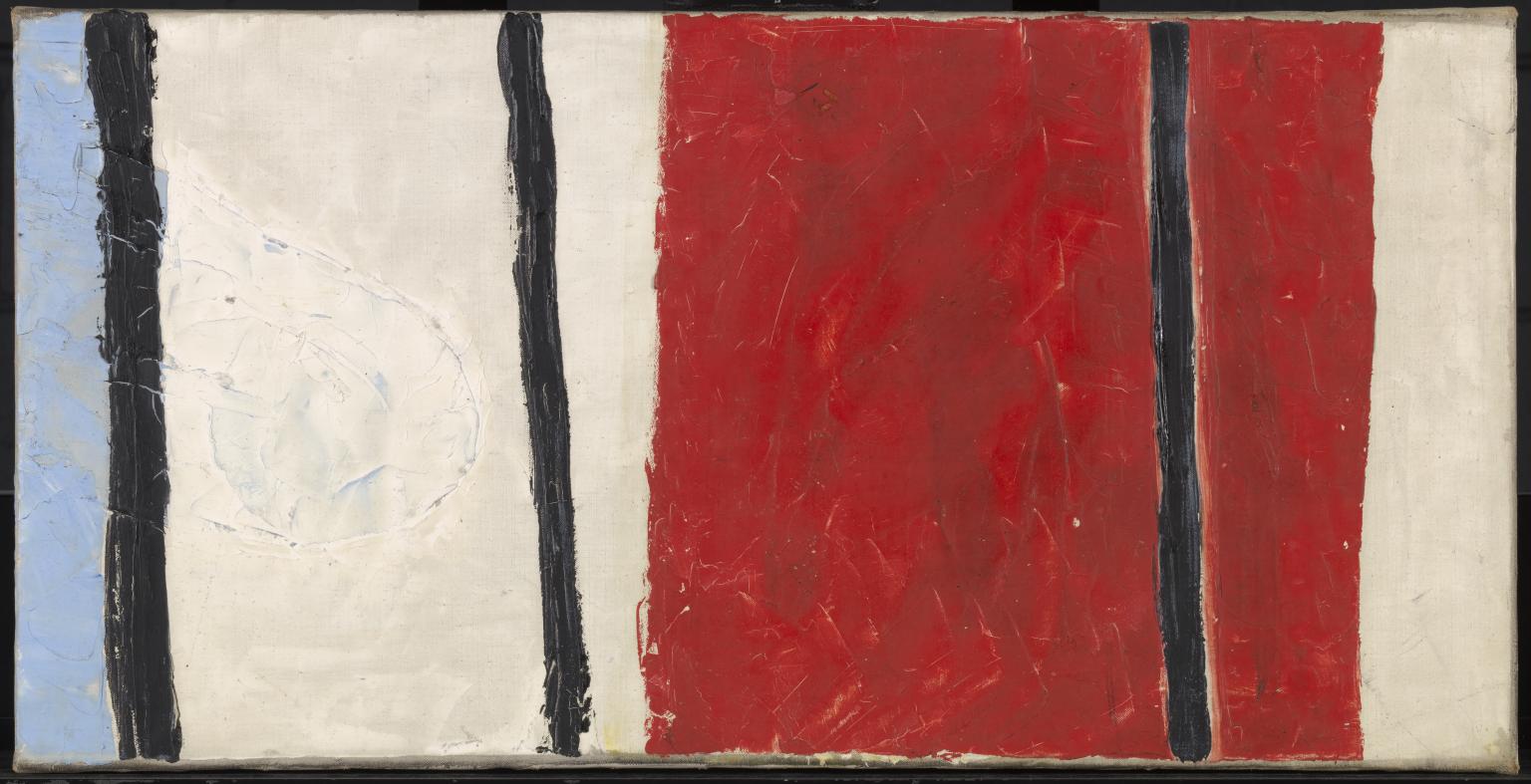
Roger Hilton, Untitled 1953
Although abstract, Hilton's work during the early 1950s has an impressionistic quality inspired by Bonnard's garden paintings. In 1953 Hilton's painting changed dramatically. Following a visit to Amsterdam and the Hague, where he was able to study Mondrian's painting, his ideas regarding space, form and colour were revolutionised. He ceased to regard the painting surface as if it was a window. Instead the forms are built up on it, emphasising its flatness. He also greatly simplified his use of shape and colour, restricting himself, as in this painting, to lines and squares in primary colours and black and white. These 'neo-plastic' works eliminate illusion and emphasise the physical, object-like quality of the painting.
Gallery label, August 2004
14/30
artworks in Modern Conversations
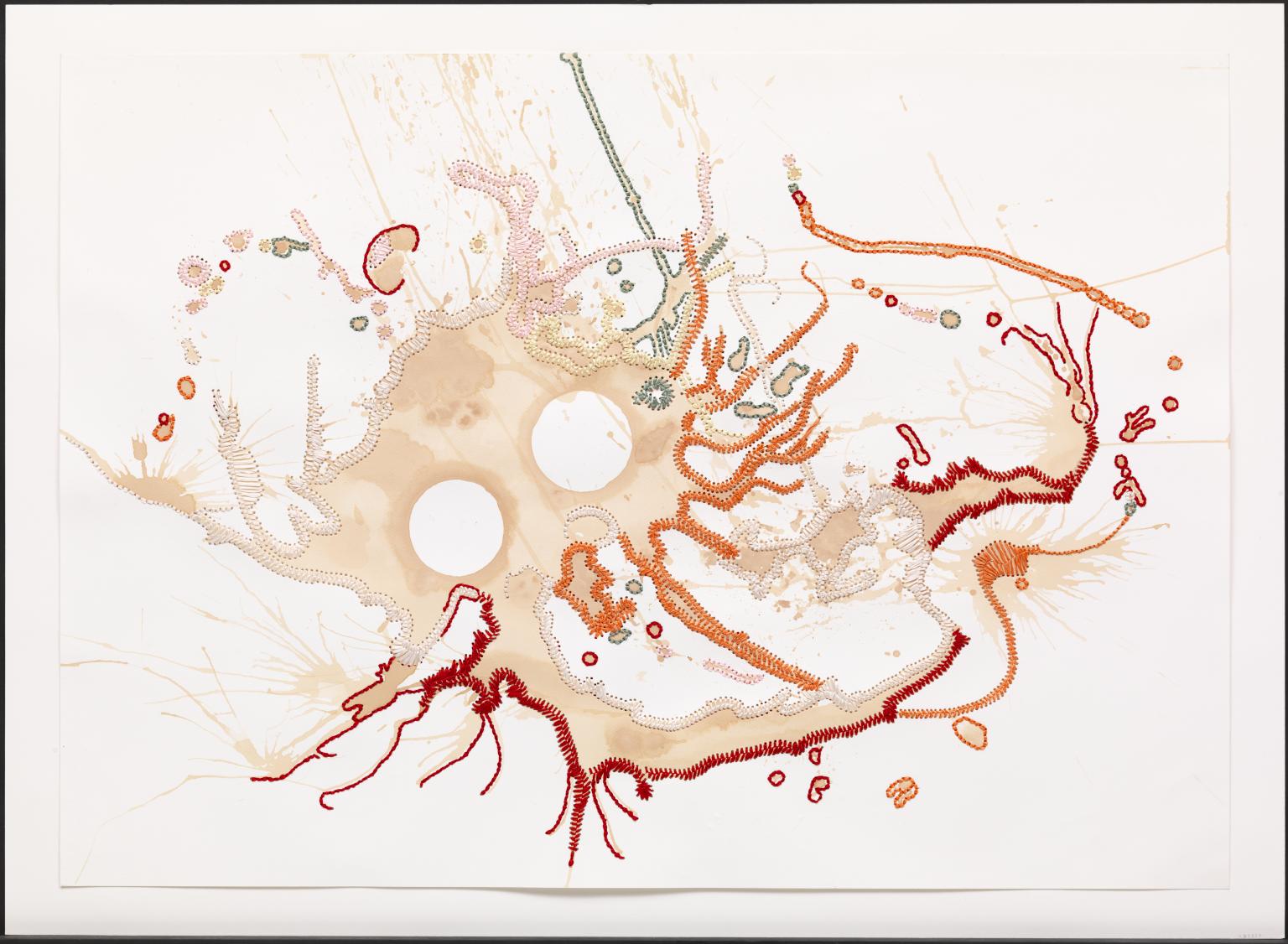
Nicholas Hlobo, Macaleni Iintozomlambo 2010
In Macaleni iintozomlambo 2010 a tea stain on white watercolour paper forms the basis for the drawing. Meandering tentacles of pale brown are emphasised by intense orange and red stitches and further defined and textured by pale coloured ribbon sutures around the tea stain. The shape resembles an underwater creature, with several of the stitched lines ending abruptly, like stunted limbs. The sexual connotations of the forms, fleshy tones and slippery surfaces found in this work are confirmed by its title. Macaleni iintozomlambo refers to a traditional Xhosa belief whereby boys would throw rocks into the river before diving in naked as a sign of respect towards the river, and in order to acknowledge that they are visitors in a space that is not their own. Hlobo has cut and sewn the paper together with his signature ‘baseball’ stitch, which is not just decorative, but also very strong. The cuts in the paper are sharp and clean, determining where the ribbon sutures will be made and how they will overlap. Hlobo always titles his works in Xhosa, an Nguni language widely spoken in South Africa. Attracted to the formal qualities of the grammar, the sounds of the words, and the linguistic flexibility of Xhosa, Hlobo’s use of the language, with all its poetic idioms, proverbs, and double entendres, is as much about defining himself as it is an effort to convey difficult truths and encourage dialogue around homosexuality, male circumcision and other culturally sensitive issues.
15/30
artworks in Modern Conversations
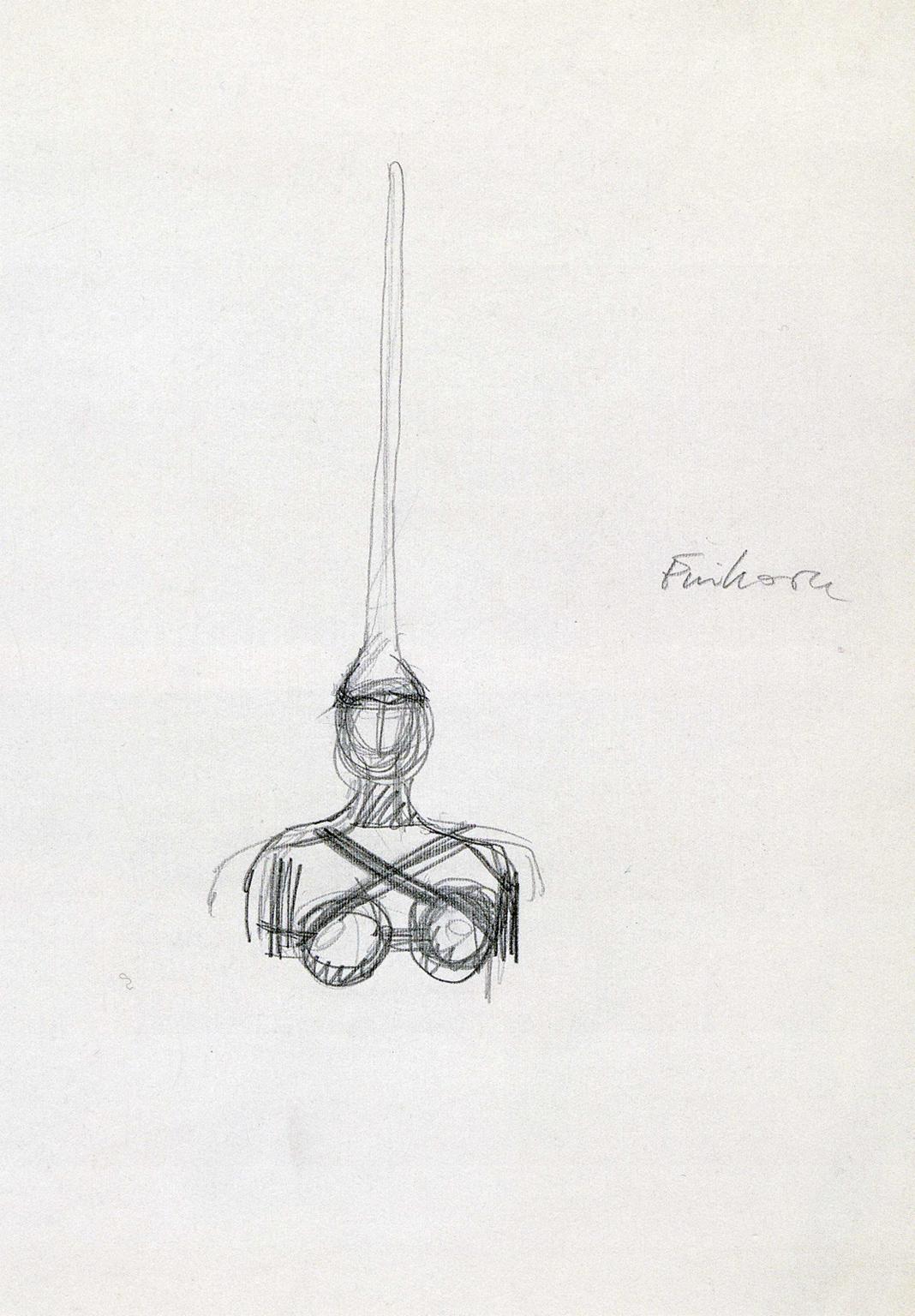
Rebecca Horn, Unicorn 1968–9
16/30
artworks in Modern Conversations
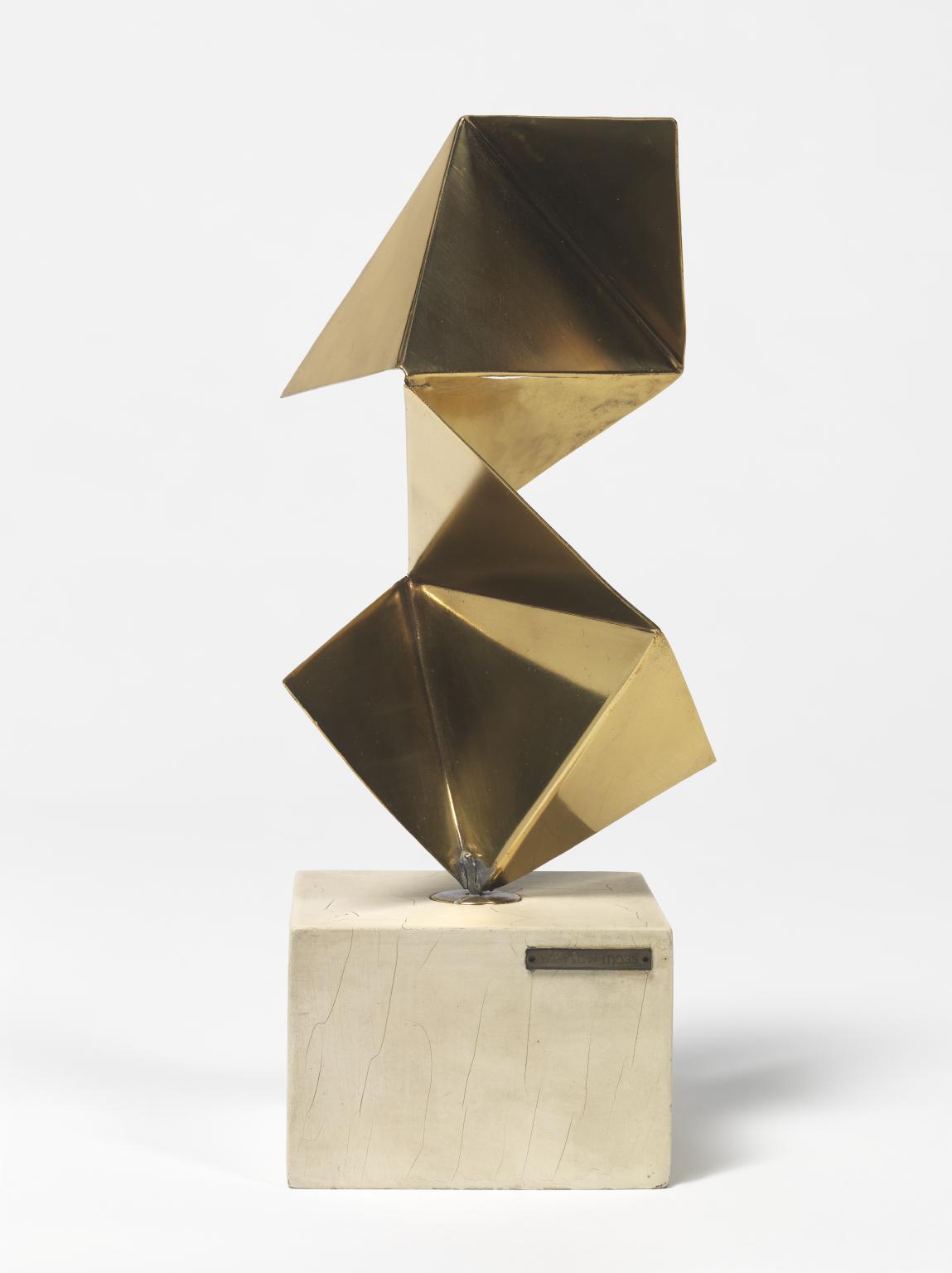
Marlow Moss, Untitled c.1950
This is one of three sculptures by Marlow Moss in which sheets of metal have been folded to create a pattern based on the structure and planes of a tetrahedron. The location of the other two is not known, but one of them is identified in a black and white archival photograph held in Tate Archives, which has an inscription by Moss on the reverse giving the title as Construction Based on a Tetrahedron and the date 1950. This photograph shows a construction composed of the same pattern of repeated tetrahedron planes as seen in Untitled c.1950, but extended so that it is formed of approximately five times as many elements. Each of the sculptures is fixed to a narrow cuboid base.The structure of this sculpture is characteristic of Moss’s three-dimensional work, which involved the exploration of concepts of geometrical mathematics. Moss is known to have read the philosophy of mathematician Matila Ghyka, whose ideas were founded upon the Pythagorean concept that the universe is formed entirely from principles of geometry. Since the late 1920s Moss had been familiar with the work and theories of the pioneering abstract artist Piet Mondrian (1872–1944), and is known to have met him in Paris in 1929.Moss attended the Slade School of Fine Art in London between 1917 and 1919. Moss’s life during the 1920s was characterised by movements between London and Cornwall. After a four-year period in Cornwall, in 1923 Moss returned to London. Moss’s name then changed from Marjorie to Marlow. A few years later, Moss was again in Cornwall, studying at Penzance Art School. In London from 1926, Moss had an exhibition with the London Group in 1927. That year Moss also moved to Paris, and attended the Académie Moderne and met Netty Nijhoff-Wind, who previously owned this sculpture. Part of a relatively varied community of artists associated with the Paris-based group Abstraction-Création in the mid-1930s, Moss here encountered the ideas and works of Swiss and French constructivists Max Bill (1908–1994) and Jean Gorin (1899–1981).During the Second World War Moss stayed with Nijhoff in the Netherlands, before fleeing for London in 1940, leaving a lot of work behind. Upon returning to England, Moss again travelled to Cornwall, and settled in Lamorna, south-west of Penzance. It is here that Moss began to make metal constructions such as a polished copper column of c.1944, partly inspired by having attended a course in architecture at Penzance during the war. Although Moss continued to make regular trips to Paris after the end of the war and exhibited in international groupings such as the Salon des Réalités Nouvelles, Lamorna remained Moss’s permanent residence until her death in 1958.The sculpture Untitled c.1950 is characteristic of Moss’s sculptural works of the 1950s, many of which were conceived as explorations in geometrical relationships. In material and form is it reminiscent of the totemic but restrained resonance of works by the modernist sculptor Constantin Brancusi (1876–1957) and the abstract sculpting of geometrical planes in the early work of Naum Gabo (1890–1977). In its basis upon non-representational geometry it is also closely connected to the tenets of post-war constructivism in Britain and further afield. Within the artist’s output of this period, these tetrahedron constructions are comparable to other metal constructions formed of geometric elements, such as the steel Spatial Construction 1949 (Nijhoff/Oosthoek Collection, Zurich), and later forms of polished brass sheets, including Concentric Circles Projected in Space 1953 (whereabouts unknown). Over the following years Moss’s sculptures took on added complexity regarding the range of materials and forms assembled together, as demonstrated by Balanced Forms in Gunmetal on Cornish Granite 1956–7 (Tate T01114). Further reading Florette Dijkstra, Marlow Moss: Constructivist the Reconstruction Project, translated Annie Wright, Den Bosch, Netherlands 1995.Lucy Howarth, Marlow Moss (1889–1958), Ph.D. thesis, University of Plymouth 2008, series illustrated p.129.Sabine Schaschl (ed.), A Forgotten Maverick: Marlow Moss, exhibition catalogue, Museum Haus Konstruktiv, Zurich 2017, illustrated p.83.Rachel Rose SmithAugust 2018Revised 2023
17/30
artworks in Modern Conversations
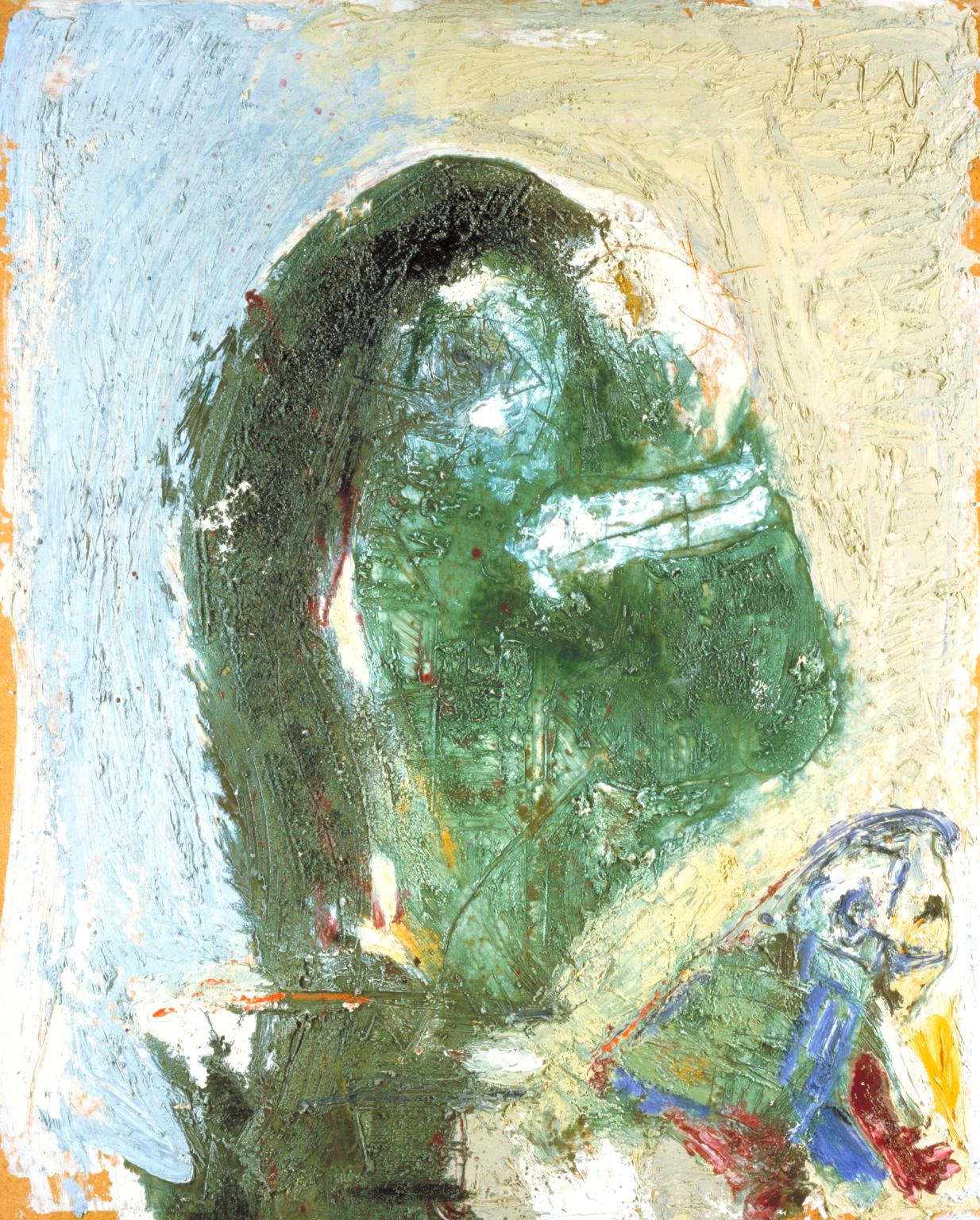
Asger Jorn, The Timid Proud One 1957
Jorn had been a prominent member of CoBrA, a group of northern European artists whose improvisatory approach to painting was intended as a way of liberating their work from repressive bourgeois conventions. Although this painting was made several years after the group disbanded, its child-like style reflects the same principles. The figure embodies some mysterious inner struggle, perhaps reflected in the title. Jorn was a great believer in these kind of opposed dualities. ‘Tension in a work of art is negative-positive: repulsive-attractive, ugly-beautiful. If one of these poles is removed, only boredom is left’, he said.
Gallery label, November 2005
18/30
artworks in Modern Conversations
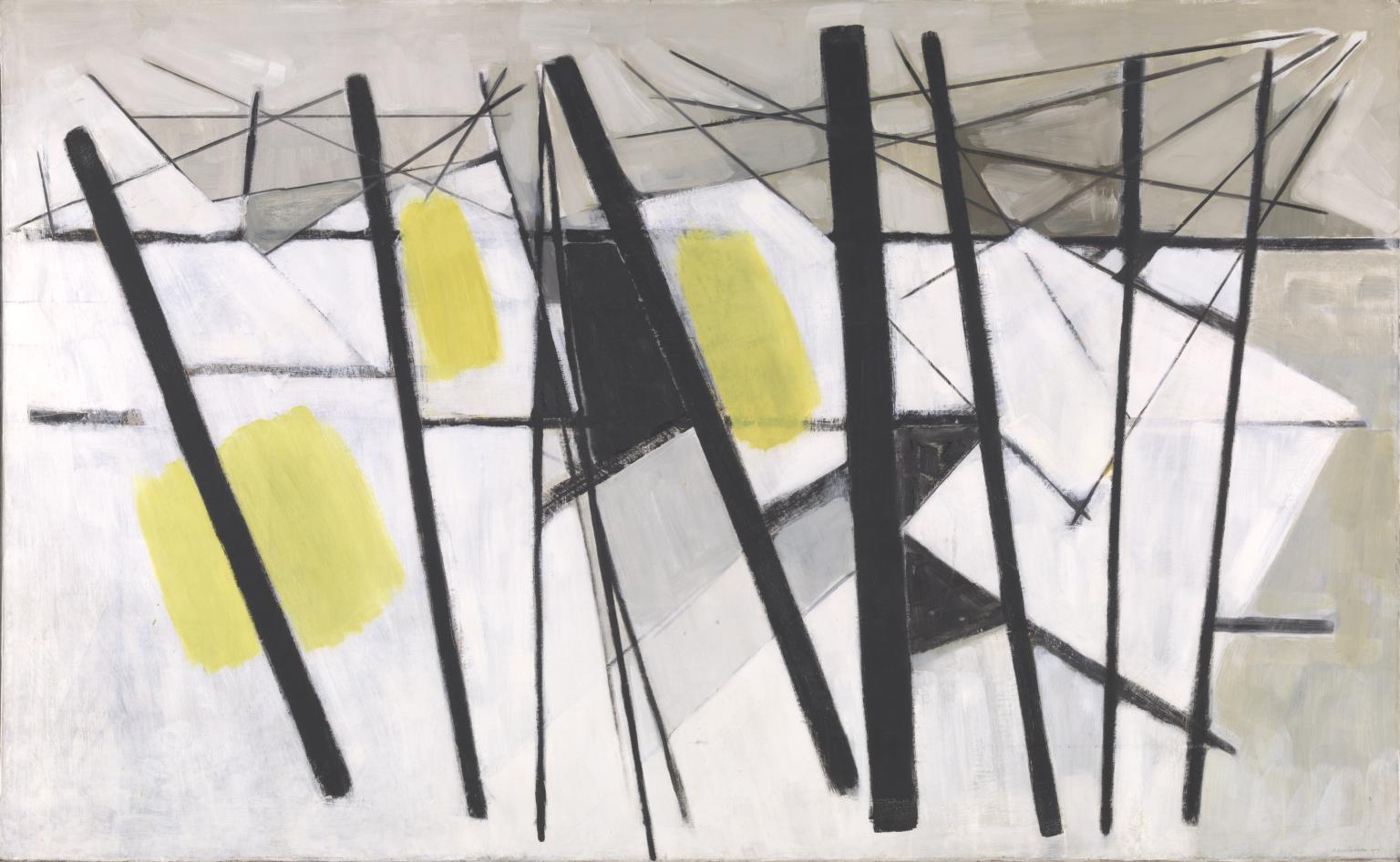
Wilhelmina Barns-Graham, White, Black and Yellow (Composition February) 1957
White, Black and Yellow (Composition February) 1957 is a painting in a landscape format that uses abstract elements of line and colour to describe a view onto a three-dimensional space. A series of densely-painted black lines or shafts stand across the painting at acute angles. Set behind these prominent black structures are thinner black lines: some of these lie perpendicular to the vertical black lines like a horizon-line or a scaffold; others are angled so they seem to describe perspectival lines leading from the foreground towards a more distant space. Within this structure are placed three yellow lozenges or patches of colour which punctuate and describe the middle ground. Each is physically close to a vertical black line of corresponding thickness, and their variation in size enhances the suggestion of depth behind the picture plane. The largest is closest to the lower edge of the painting while the two smaller ones, placed higher up, seem to be further behind. The suggestion of depth is also achieved by the overpainting of some black lines in the middle ground with white paint. This wider field of white and grey seems to describe a low-lying ground or floor (upon which some darker sections might be read as shadows) and a visual field saturated with light.
22/30
artworks in Modern Conversations
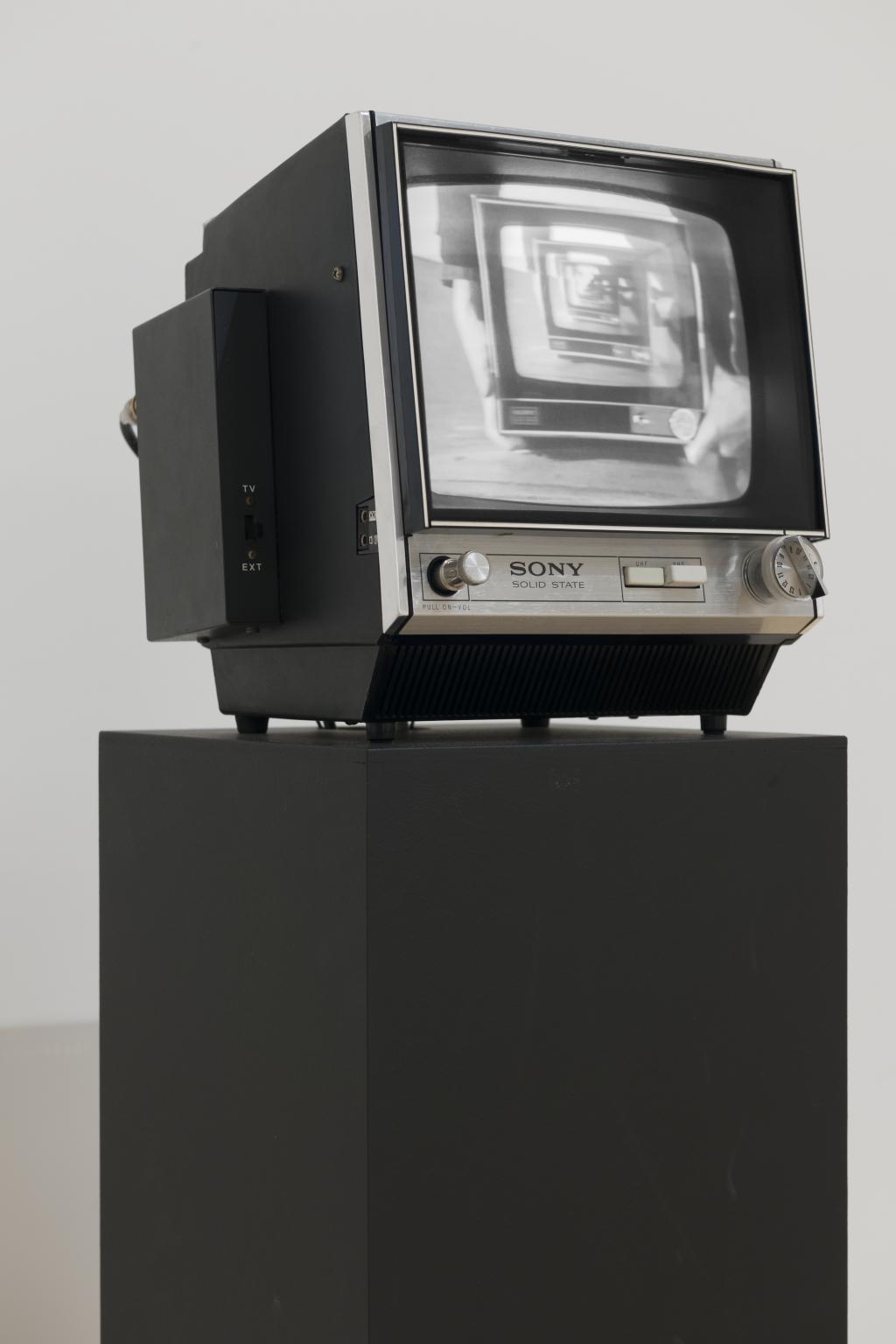
Stephen Partridge, Monitor 1974
Monitor is one of the early defining works of video art in Britain, revealing the structural possibilities the medium offered to artists. For Partridge it is a pure exploration of its working process. A 1973 Sony monitor is recorded close up by a camera, the hardware becoming the subject of the video. Thecamera, linked to the monitor it is filming, creates in the monitor an infinite succession of repeated images of itself. The artist’s hands are seen to turn the monitor to the right through 90 degrees, challenging the physical restrictions of the monitor by becoming physically involved with repositioning it.
Gallery label, September 2016
23/30
artworks in Modern Conversations
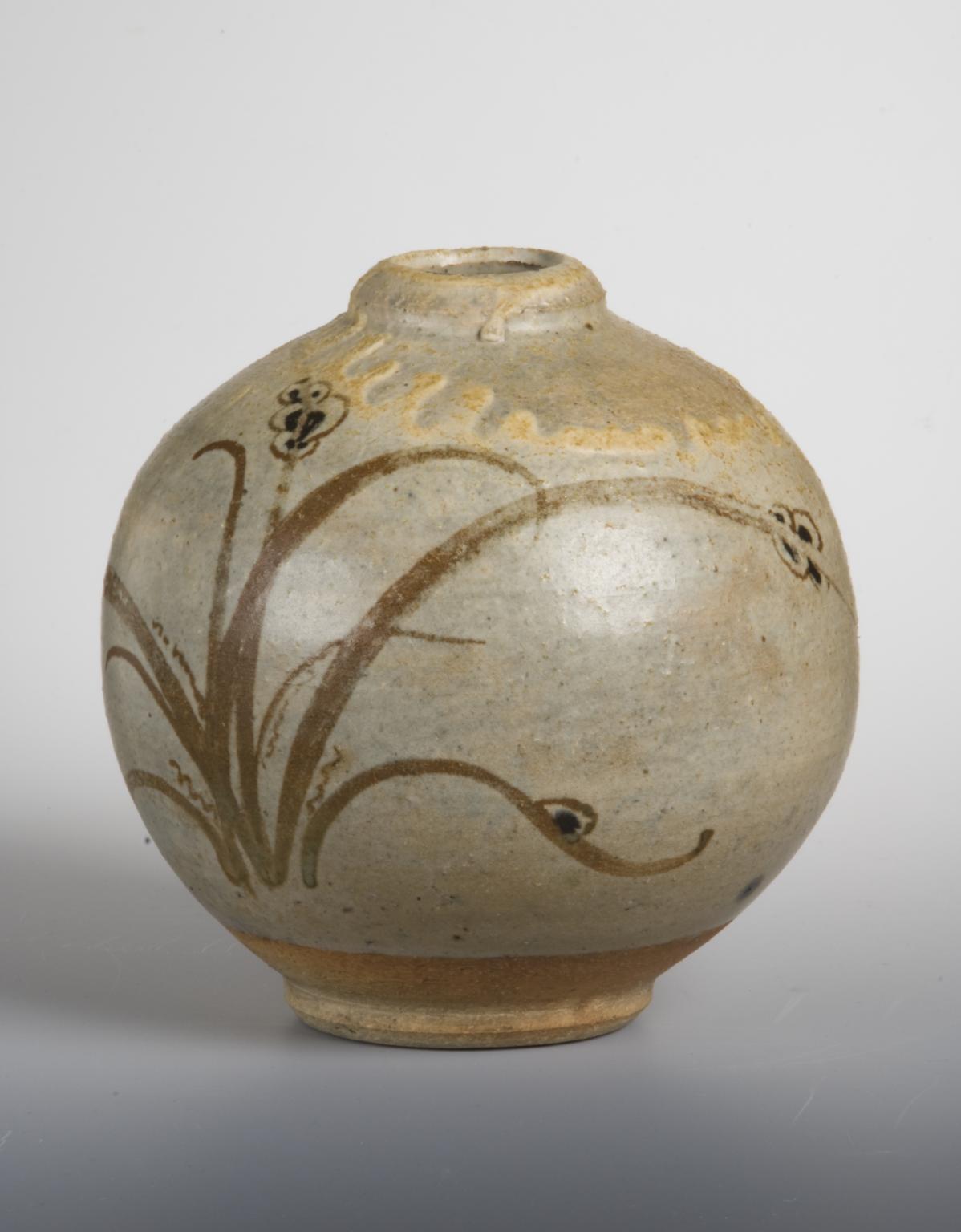
Bernard Leach, Spherical Vase c.1927
The 1920s saw a revival in traditional crafts. The potter Bernard Leach mixed a revival of pre-industrial English designs with similarly traditional styles from Japan, where he had studied. He exhibited his pots alongside painters like Ben and Winifred Nicholson. A resurgence in craft practice in painting and sculpture, as well as pottery and other crafts, had its roots in the anti-industrialism of the 19th-century Arts and Crafts movement. It was given more urgency in the wake of the mechanised destruction of the First World War.
Gallery label, September 2016
25/30
artworks in Modern Conversations
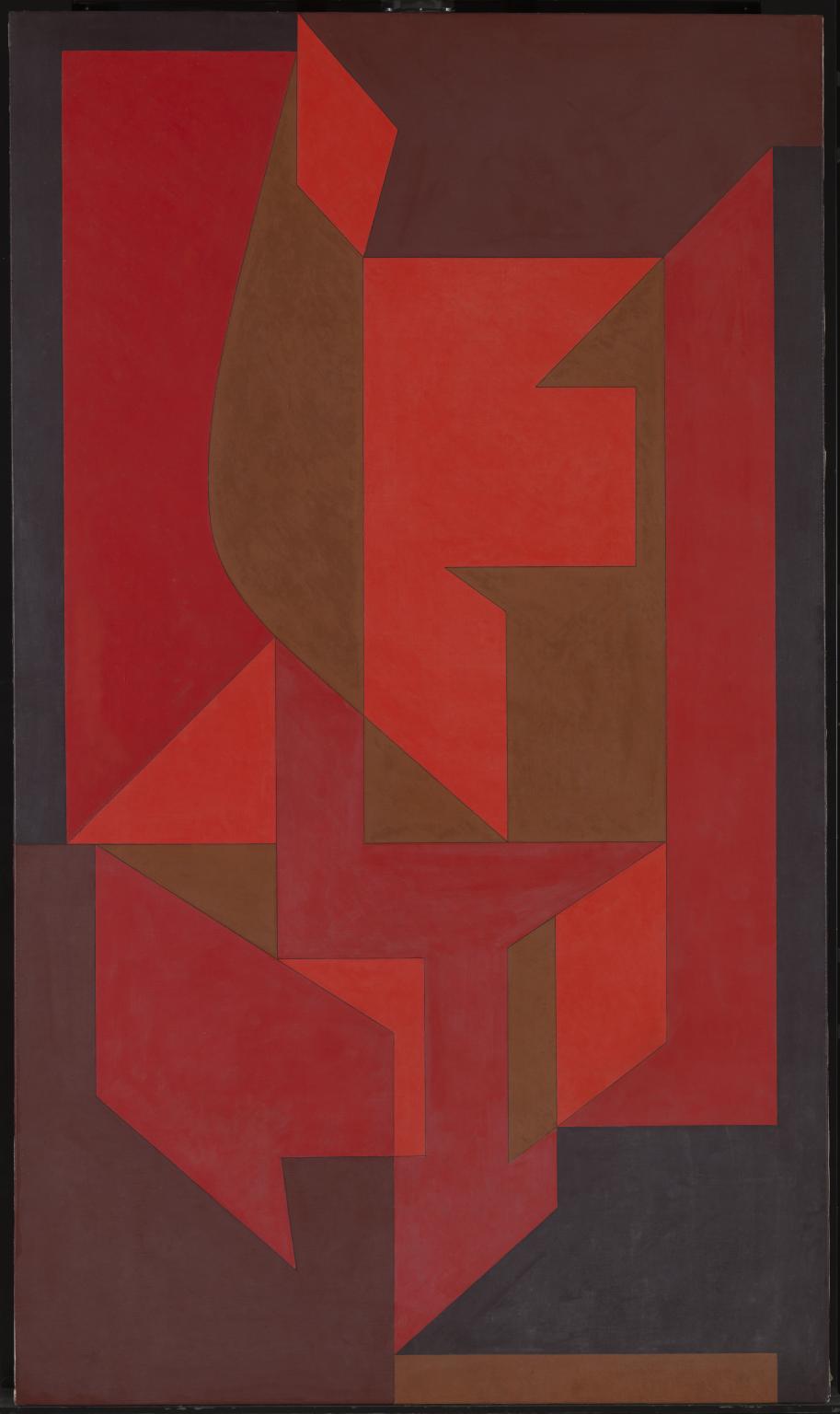
Victor Vasarely, Nives II 1949–58
26/30
artworks in Modern Conversations
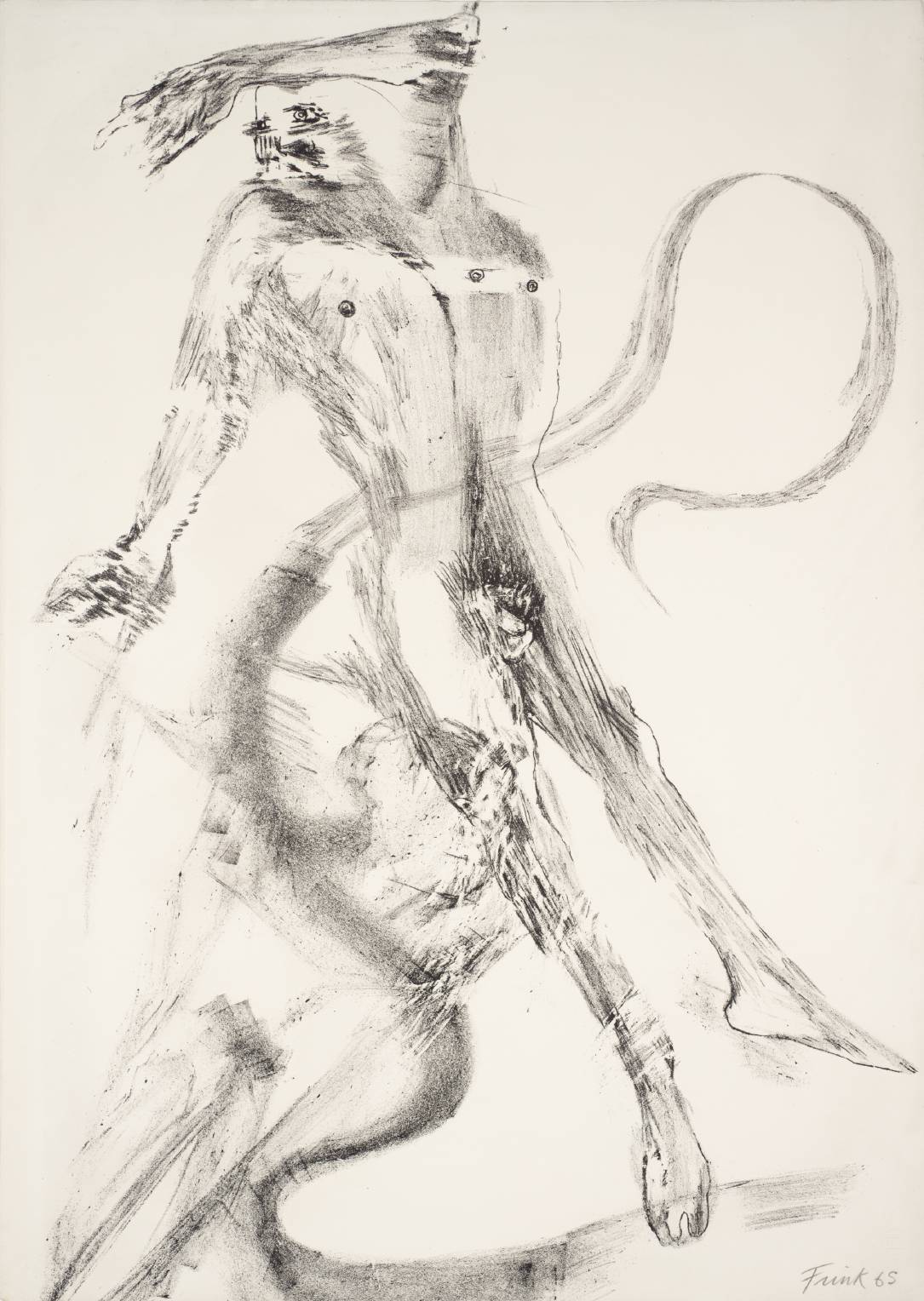
Dame Elisabeth Frink, Spinning Man V 1965
27/30
artworks in Modern Conversations
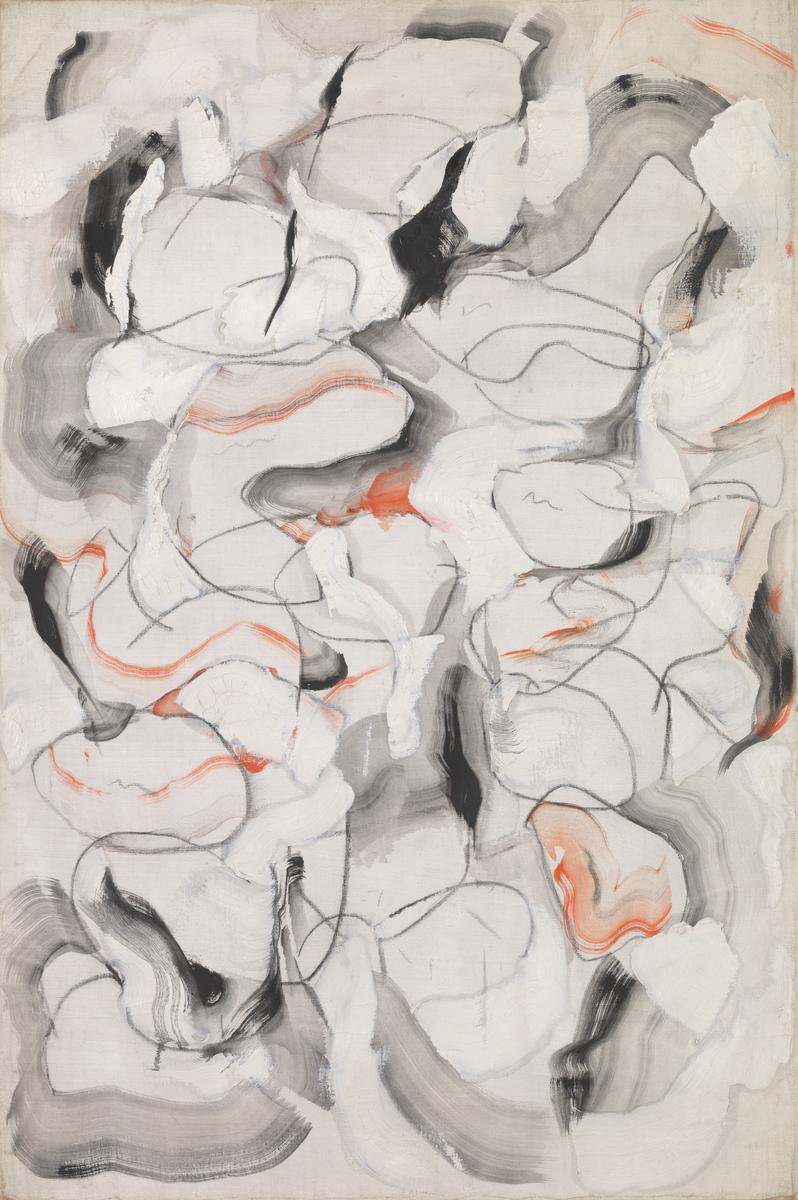
Ida Cadorin Barbarigo, Open Game 1961
Open Game (Jeu ouvert) 1961 is an abstract oil painting in which broad brushstrokes are alternated with thin swirling lines, filling the entire surface. Barbarigo used a limited palette in this kind of abstract canvas. Here, black and white dominate, with occasional red touches, over an off-white background. As the title suggests, this painting conveys a sense of playful experimentation and improvisation; nevertheless, each brushstroke appears to have been executed through controlled gestures, following an internal logic and resulting in a balanced overall composition.
29/30
artworks in Modern Conversations
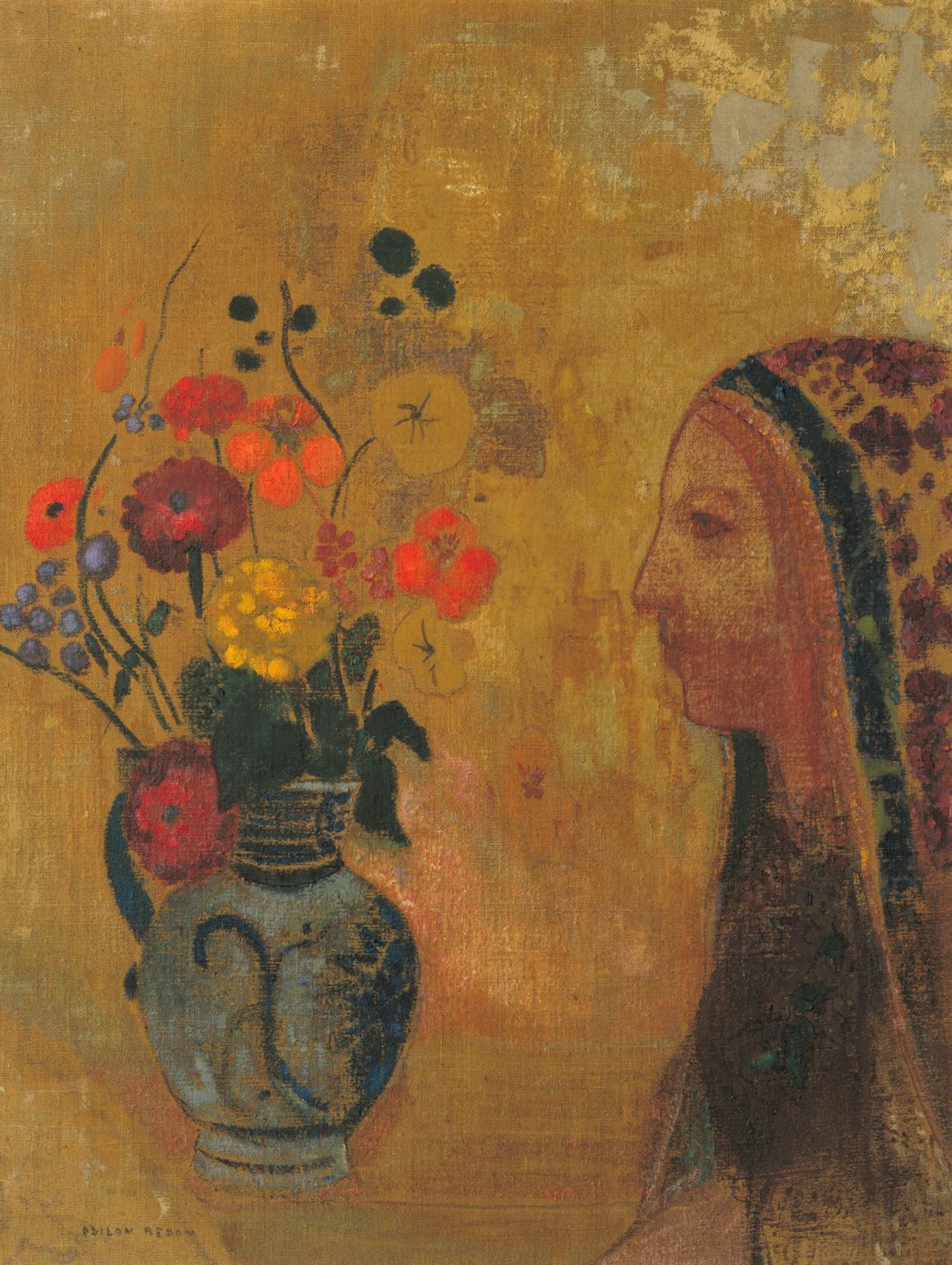
Odilon Redon, Profile of a Woman with a Vase of Flowers c.1895–1905
This is one of a series of paintings by Redon which combine flowers and a female head. For Redon this motif was expressive of a harmony or correspondence between nature and the human soul. Here the subdued colours emphasise the ethereal quality of the image. The woman's head is drawn in a simple, almost archaic style, and is likely to have been inspired by early Italian Renaissance portraits.
Gallery label, September 2004
30/30
artworks in Modern Conversations
Art in this room
Rebecca Horn
Performances II
1973
Naum Gabo
Kinetic Stone Carving
1936–44
Karl Weschke
Pillar of Smoke
1964
Margaret Mellis
Number Thirty Five
1983
Amedeo Modigliani
Head
c.1911–12
Keith Vaughan
Ninth Assembly of Figures (Eldorado Banal)
1976
You've viewed 6/30 artworks
You've viewed 30/30 artworks